
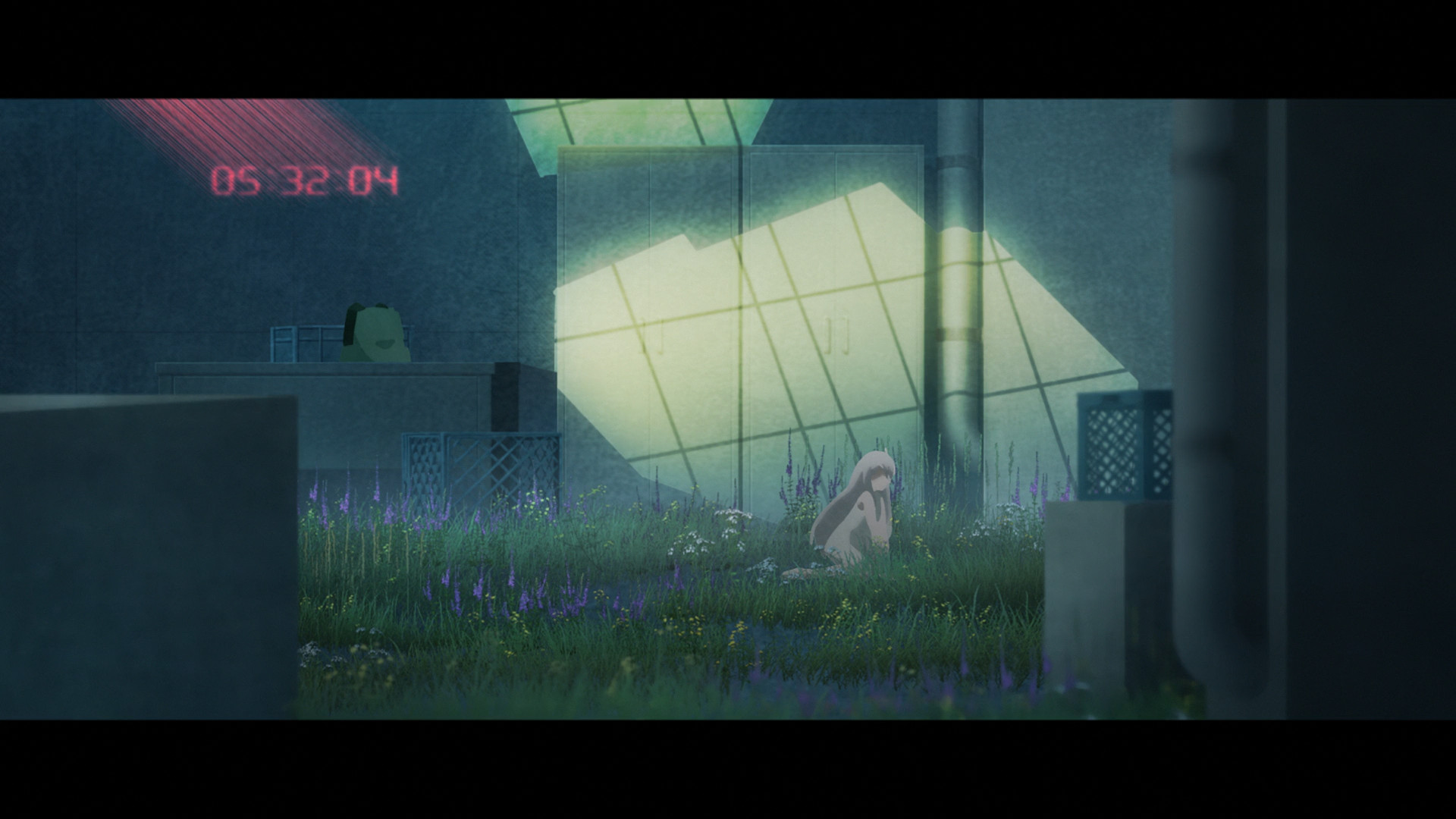
Her 10th Game?
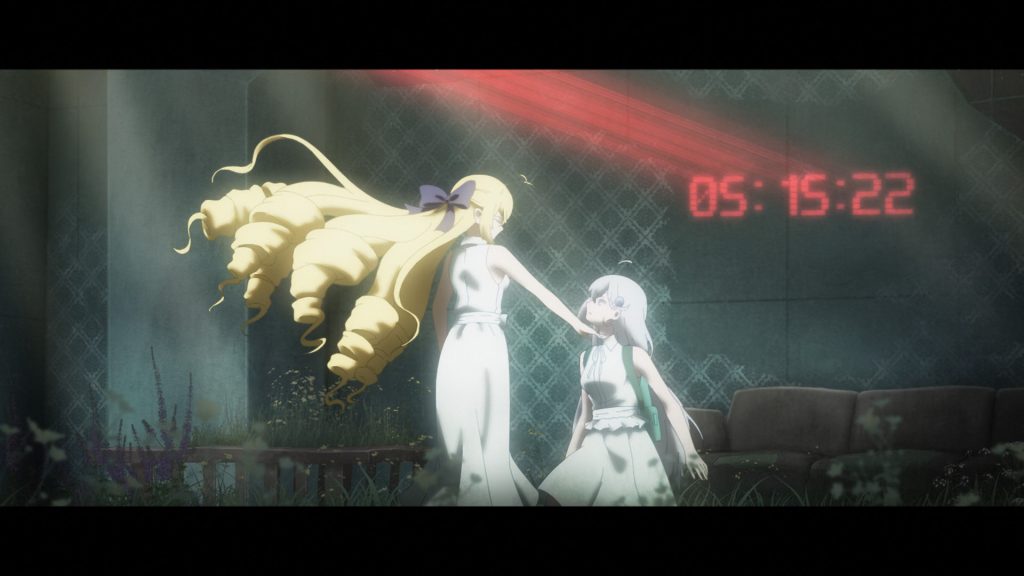
After the stunning premiere of this show, I was incredibly excited to see its second episode, and while it’s still great, I do wish it had the same runtime as the first. The process of having a whole death game session in one sitting is a better experience for me, but once all the episodes come out, you can simply binge-watch it, so I guess it’s not a big deal.
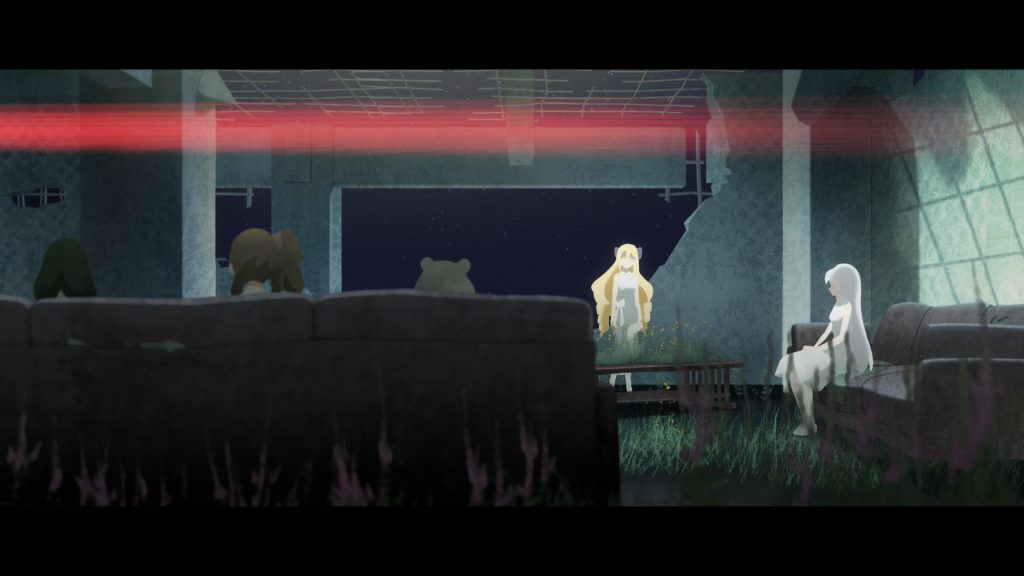
The episode seems to take a bit of a time backward, as Yuki claims that this is her 10th game rather than the 28th seen in the last episode. In this game, she meets a group of death game players who all know each other and have been in games together before, but none of them know her. It’s a bit the opposite of the scenario in the first episode, where everyone was inexperienced and trusted Yuki quite a bit. In this episode, it’s reversed, as no one seems to trust Yuki over Mishiro, who quickly becomes the leader of the group since she has known the other girls before and quickly takes command.
In the previous game, there wasn’t really an antagonist unless you count that as the death game hosts themselves, but here it really does feel like they want to pit Yuki and Mishiro against eachother, and as this is the previous game I am curious on how that will go. We have already seen Yuki’s behavior in “present day”, so it is interesting what lessons she will end up taking from this experience, maybe it’s the fact that she no longer will go out of her way to try to get people on her side, if they wanna follow, they’ll follow, like we saw in episode 1. The episode ends on a cliffhanger with Yuki going out of her way to save a player the rest wanted to leave behind similar to herself in the future, and we are left wondering what will happen next, however there is some thing that might give us a hint to that.
Roleplaying
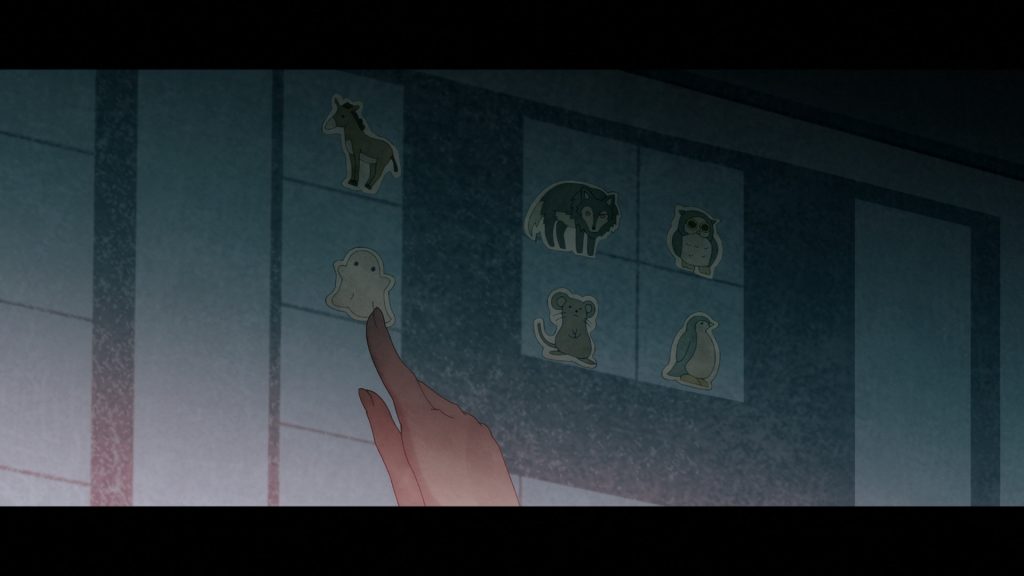
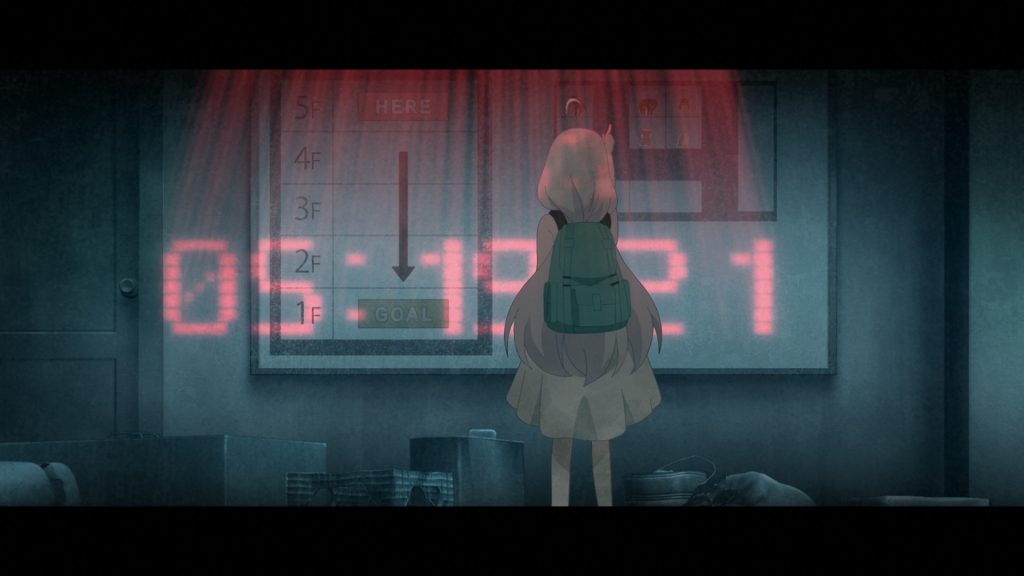
I didn’t realize the significance of this when I first watched, but after reading comments and taking a second look, it is clear from the initial scene with the animal and ghost stickers that Yuki is meant to be the ghost in this group. The “yu” of “Yuuki” (幽鬼) corresponds to the “yu” (幽) in ghost (幽霊), and she is essentially excluded from the group after going to save the girl who stepped on the landmine. It is likely that the other girls are also symbolized in some way by the animals. Perhaps Mishiro represents the wolf, leading the rest like a wolf pack. It is hard to say what all of this will mean in the end, but I do think there may be some subversion involved. The ghost is the only one objectively dead, yet in this scenario, they are also the only one dead. Since Yuki is our identified ghost, I suspect the ghost may be the only one to survive this challenge, while all the other animals perish.
It also raises the question of how much of this the organizer planned. Was the ghost always meant to win? Did they purposely not activate a trap to make Yuki’s instincts wrong and cause the others to distrust her? Or is it all just a coincidence? I think this type of background storytelling is great, and it is one of my favorite parts of anime like this. This is a slightly shorter review since the episode is shorter and not as intense as the first, but the visuals of the anime still shine, with an ending that is just as beautiful and showcases the show so well.
Ending and Sound Design
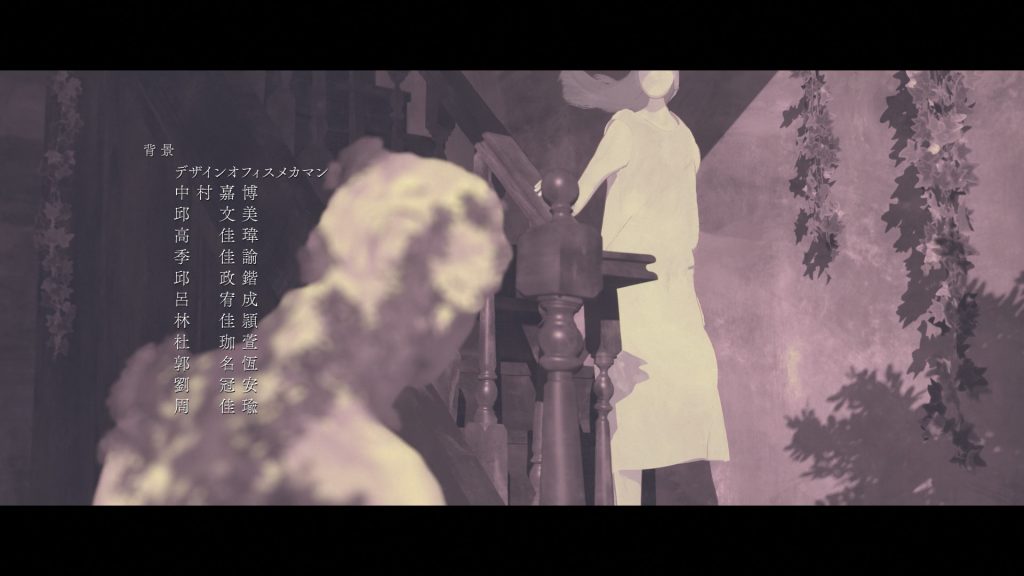
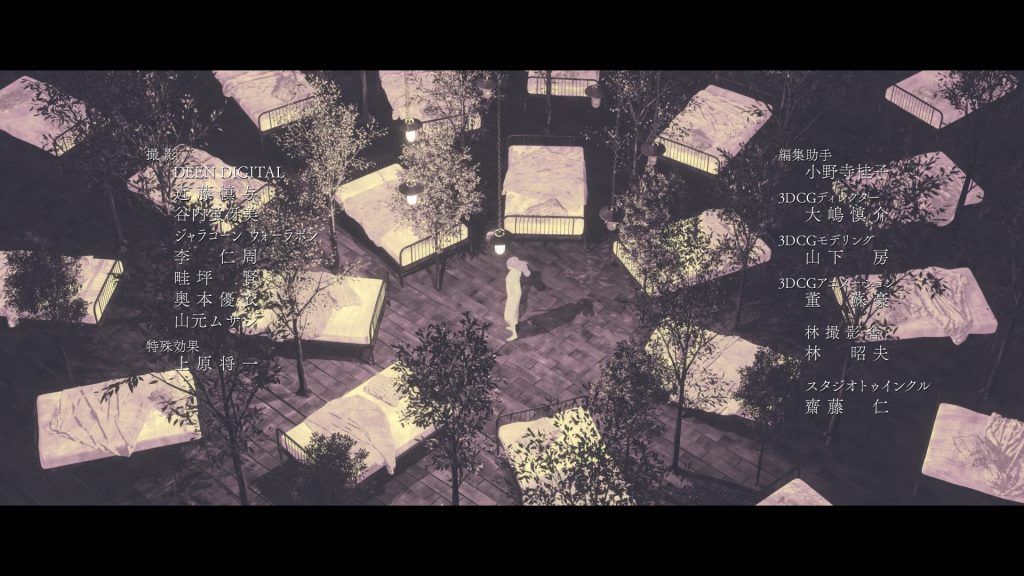
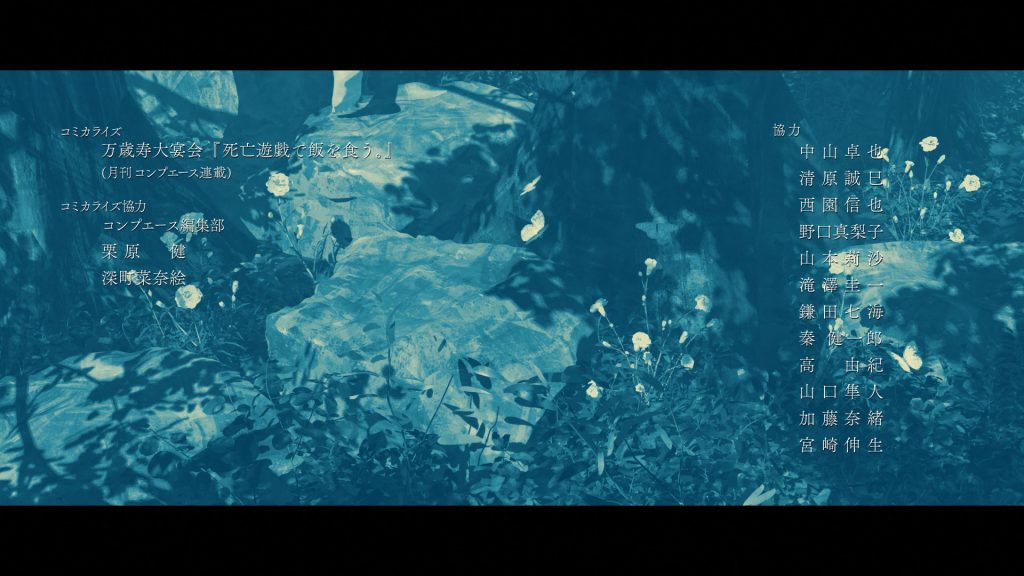
Last week, I promised to talk about the OST and sound design of the show, which I will get into, but I wanted to mention the Chiai Fujikawa ending song, which is so beautiful, alongside the great animation by Hewa. The style of the visuals is a bit different from the show in many ways, but to me, it captures a lot of what makes the show charming so well. Hewa’s use of colors for this ending was very unique, with most of the scenes dominated by one primary color that conveyed the mood effectively. It starts off with this, I guess, desaturated red/pink? I’m not great with colors, sorry, which feels more “mundane” at first. But when the ending visual switches to the forest, the primary color changes to a strong blue, accompanied by visuals of water.
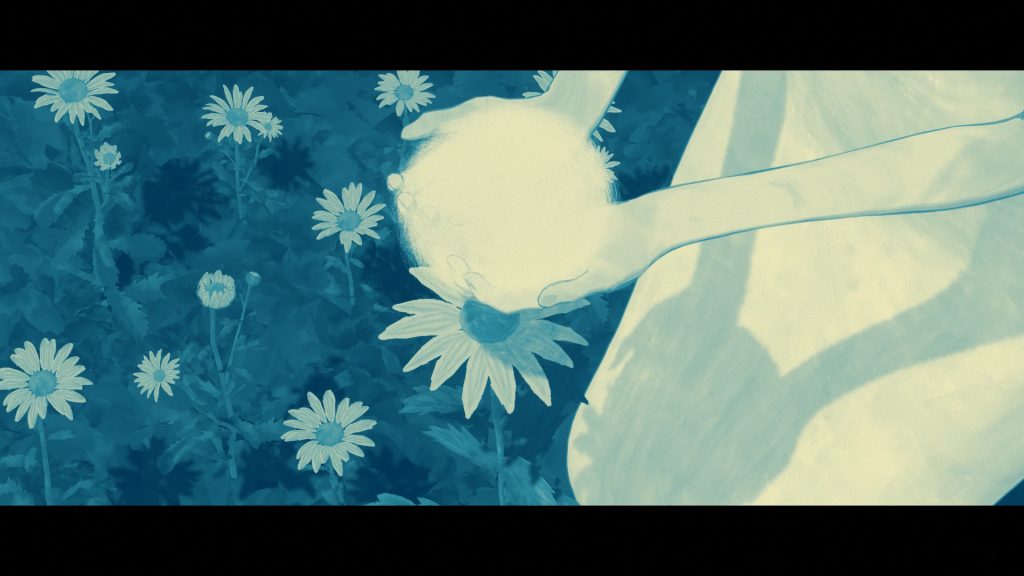
However, it doesn’t feel comforting at all. In fact, the transition to blue happens after the girl in white sees that there are no other girls in the bed. It’s almost like the water is “washing” away her sins so that she can be pure white again, shown by how she grabs the white fluff near the end, which the show uses for blood through their unusual process in the lore. This whole ending visual has a strange sense of eeriness. The only color that never changes is the white of the girls’ outfits, which I think might be suggesting that Yuki herself never changes. The softly sung track by Chiai Fujikawa only exacerbates this feeling, making it almost like we’re watching the “before” in a murder case. It’s such a fitting ending for the show, and I think it’s great.
Now, the topic I promised to talk about for episode 2 is the sound design. It is honestly not quite as strong as in episode 1, but it is still very good. The show makes very smart use of silence, with subtle noises adding tension, such as footsteps and bell sounds in the background. The music sometimes builds up to create tension during conflicts, like when no one listens to the correct opinion. However, during deaths or dangerous moments, the music often shifts into something that sounds almost like an angel’s voice singing. It is soft, yet backed by somber notes, and becomes harrowing as the action unfolds and the notes and vocals grow louder and more intense. This was more prominent in episode 1, but I wanted to mention it because it was excellent. It adds a lot of weight to the atmosphere, and I hope to see the sound design return closer to the level of episode 1 later on.
Shiboyugi is still quite good, and I cannot wait to see the next episode. The premiere is a hard thing to match, but I trust the series will eventually get close, perhaps as soon as the next episode.
Leave a Reply